
Why Infection Control Education Needs to Feel Different in Long-Term Care

If you have ever worked in long-term care, you know education does not happen in a perfect classroom
If you have ever worked in long-term care, you know education does not happen in a perfect classroom.
It happens between call bells, during shift change, while staff are supporting residents, answering family questions, completing documentation, assisting with meals, and trying to keep up with everything else happening on the floor.
So when we talk about infection prevention and control education, we need to be honest about the environment we are asking people to learn in.
A 20-page policy may be important. A mandatory module may be required. An audit may identify a gap.
But none of those things automatically mean that staff have learned the concept in a way they can apply during a real shift.
That is where many IPAC education programs fall short.
The issue is not that staff do not care. Most long-term care staff care deeply. They want to do the right thing.
They want to protect residents. They want to feel confident in their practice.
The issue is that we often teach IPAC in a way that does not match the reality of their work.
We give information when staff need practice.
We give reminders when staff need coaching.
We give audits when staff need feedback they can actually use.
We give policies when staff need a clear, practical way to turn the policy into a habit.
That is the difference between education that checks a box and education that changes behaviour.
What traditional IPAC education often misses
Infection control education has historically relied on policies, online modules, and audits.
All three have a place.
Policies set expectations. Online modules introduce information. Audits help identify whether practices are being followed.
But they cannot be the whole strategy.
If a staff member reads a hand hygiene policy, that does not mean they will consistently perform hand hygiene at every required moment during a busy shift.
If a staff member completes an annual IPAC module, that does not mean they will remember every key point while rushing between residents.
If a staff member is observed once during an audit, that does not mean the practice has become automatic.
This is especially true in long-term care, where the work is constant and the demands are high.
When staff are exhausted, overwhelmed, or moving quickly, they do not need more information layered on top of an already full day. They need simple, repeated, practical learning moments that help them connect the concept to the work they are actually doing.
Good IPAC education should not feel like something being done to staff.
It should involve them.
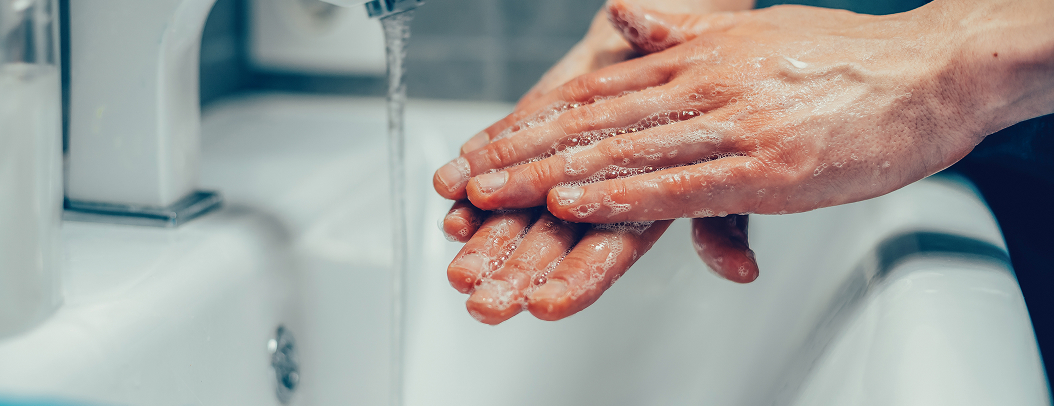
Hand hygiene is a perfect example
Most staff already know that hand hygiene matters. The challenge is helping it become consistent in real life.
Hand hygiene is one of the most important infection prevention practices in long-term care.
It is also one of the most commonly repeated topics in IPAC education.
Most staff already know that hand hygiene matters. The challenge is helping it become consistent in real life.
Because real life is where missed moments happen.
A staff member may be interrupted. A resident may need urgent help. Supplies may not be where they should be. A task may change halfway through. Someone may be called away.
This is why hand hygiene education has to move beyond reminding people that it matters.
It needs to help staff recognize the moments where hand hygiene is most likely to be missed.
It needs to make technique visible.
It needs to create a safe way to practice.
It needs to be repeated often enough that the behaviour becomes part of the rhythm of care.
Why brief education works
One of the most important adult learning principles in long-term care is this:
If education is too long, too abstract, or too disconnected from the floor, it will not stick.
That does not mean staff are unwilling to learn. It means the education has not been designed for the environment.
A nurse or PSW at the end of a demanding shift does not need another long lecture about why hand hygiene matters. They likely already know that.
What may be more effective is a two-minute huddle focused on one common missed moment.
Or a quick UV light activity that shows missed areas after handwashing.
Or a short demonstration beside the point of care.
Or a five-minute team challenge that makes the concept visible and memorable.
Brief education works because it respects staff time and cognitive load.
It says: we know you are busy, so here is one practical thing you can use right away.
Make the learning visible
One of the reasons hand hygiene can be difficult to improve is that contamination is usually invisible.
Staff cannot always see what was missed.
That is why visual learning tools can be so effective.
For example, using UV lotion and a black light can turn hand hygiene from a concept into something staff can see for themselves. A staff member applies the lotion, cleans their hands, and then checks under the light to see what areas were missed.
That one activity can teach more than another reminder ever could.
It shows the fingertips.
It shows around the nails.
It shows the thumbs.
It shows the areas that are commonly missed.
And it gives immediate feedback without needing to shame anyone.
The goal is not, “Look what you did wrong.”
The goal is, “Now you can see what to adjust.”
That difference changes the learning environment.
Make the learning safe
The goal is not just compliance when someone is watching. The goal is consistent practice when no one is watching.
Staff need to feel safe enough to learn.
That does not mean lowering standards. It does not mean ignoring non-compliance. It does not mean pretending infection prevention is optional.
It means recognizing that people learn better when they are supported instead of embarrassed.
If someone feels like an audit is designed to catch them, they may become anxious or defensive. They may focus more on the person watching them than on the actual practice.
But if that same person is invited into a short, positive learning activity, they are more likely to engage.
In IPAC education, this can look like:
- asking staff what gets in the way of hand hygiene
- creating space for questions without judgment
- using missed moments as coaching opportunities
- allowing staff to practice before being formally evaluated
- focusing on improvement rather than blame
- recognizing good practice when it happens
The goal is not just compliance when someone is watching.
The goal is consistent practice when no one is watching.
Introducing Hand Hygiene Olympics
One way to bring this type of learning to life is through a Hand Hygiene Olympics.
Hand Hygiene Olympics is a team-based, interactive education activity designed to help staff practice hand hygiene in a way that is visual, memorable, and positive.
Instead of sitting through another reminder about hand hygiene, staff participate in short challenges that help them see how well they are applying the technique.
For example, a common activity uses UV lotion and a black light. Staff apply the lotion, clean their hands as they normally would, and then place their hands under the light to see which areas were missed.
This makes the learning immediate.
It shows the fingertips.
It shows around the nails.
It shows the thumbs.
It shows the areas that are easy to miss during a busy shift.
The “Olympics” part comes from making the activity fun and team-based. Staff can participate in quick stations, challenges, or friendly competitions where the focus is not on catching mistakes, but on practicing together and improving technique.
The goal is not to make infection control less serious.
The goal is to make the learning easier to understand, easier to remember, and easier to apply on the floor.
What Hand Hygiene Olympics gets right
A Hand Hygiene Olympics-style activity works because it changes the tone of the education.
Instead of approaching hand hygiene only through correction, it creates a positive way for staff to practice and improve.
It turns “remember to wash your hands” into:
- “Let’s see what gets missed.”
- “Let’s practice this together.”
- “Let’s make the invisible visible.”
- “Let’s improve as a team.”
That is a different kind of learning.
And in long-term care, that difference matters.
How to apply this in your home
If you are an Administrator, Director of Care, IPAC Lead, educator, or manager, start small.
Choose one IPAC concept that your team already knows but may not be applying consistently.
Then ask:
- What is the one behaviour we want to improve?
- Where does this behaviour happen during the day?
- Can we show it instead of only explaining it?
- Can staff practice it safely?
- Can we keep it brief?
- Can we repeat it?
- Can we make it positive?
For hand hygiene, that might mean focusing on one specific moment, such as after glove removal or before resident contact.
Then build a simple activity around it.
Show the practice.
Let staff try it.
Give feedback in the moment.
Repeat the message throughout the week.
Recognize improvement when you see it.
The bottom line
Long-term care teams do not need IPAC education that simply adds more pressure to an already demanding day.
They need education that helps.
They need education that fits.
They need education that turns knowledge into action.
Hand hygiene is a perfect example because the concept is familiar, but the habit still requires attention, practice, and reinforcement.
When we teach it through short, practical, visual, and positive learning moments, we give staff a better chance to succeed.
And when staff succeed, residents are better protected.
That is the point.
Not just education for documentation.
Education that changes what happens on the floor.
Need practical hand hygiene education for your team?
IPAC Consulting works with long-term care homes to create custom IPAC education that is clear, engaging, and built around the realities of care.
From hand hygiene reinforcement to outbreak readiness and department-specific training, our certified infection control consultants can help turn IPAC knowledge into everyday pr