

If Your Home Is Always Putting Out Fires, Read This

Over time, many leaders start to feel like they are spending their days reacting instead of moving the home forward.
In long-term care and retirement homes, it can feel like everything is urgent.
A missed documentation. A breach in infection control practices. A cleaning issue. A family complaint. A staffing challenge. A follow-up item that suddenly needs attention.
Before one issue is fully handled, another one pops up. Over time, many leaders start to feel like they are spending their days reacting instead of moving the home forward.
If that feels familiar, it does not necessarily mean your team is doing a poor job. Often, it means something else is happening:
Everything is being treated with the same level of urgency, even though not every issue carries the same level of risk.
That distinction matters more than people think. In fact, Public Health Ontario’s Infection Prevention and Control Organizational Risk Assessment for Long-Term Care and Retirement Homes is built around this exact idea. It provides a step-by-step approach to identifying and analyzing infection control risks so homes can implement and prioritize the right infection control measures.
One of the biggest challenges in long-term care and retirement is that the loudest issue is not always the most important one.
- Some concerns are one-offs, for example, a staff member not disinfecting a shared sit-to-stand lift between uses.
- Some are recurring patterns, for example, multiple staff members not disinfecting shared equipment between uses.
- And, some are signs of a deeper systems gap, for example, inaccessible medical-grade, easy-to-use disinfectant wipes (often seen when staff have to walk distances to find the appropriate wipes)
When those all get treated the same way, leaders stay stuck in firefighting mode. The issue that gets attention first is not always the one carrying the greatest risk to resident safety, compliance, team consistency, or outbreak readiness.
Three Questions to Ask
When something goes wrong, ask:
Have we seen this before?
Does this create real risk for safety, compliance, or consistency?
Is this issue the problem itself, or is it pointing to something underneath?
Based on your answers, try sorting the issue into one of these three categories:
- One-off issue: An isolated concern that needs correction but may not point to a bigger problem. These are often “easy-to-fix” issues that should be addressed on the spot without the need for dedicating time and resources
- For example, a missed opportunity for disinfecting shared equipment, which is only observed with one staff member but is not a pattern seen across your unit, would require a quick just-in-time education.
- For example, a missed opportunity for disinfecting shared equipment, which is only observed with one staff member but is not a pattern seen across your unit, would require a quick just-in-time education.
- Recurring issue: The same type of issue keeps appearing. This often points to a gap in process, follow-through, or reinforcement. These issues often require planned education and follow-up to ensure consistency
- For example, multiple staff members not disinfecting shared equipment between uses would warrant a planned staff huddle and follow-up auditing.
- For example, multiple staff members not disinfecting shared equipment between uses would warrant a planned staff huddle and follow-up auditing.
- Systems issue: The concern reflects something deeper across the home, such as inconsistent practices, unclear ownership, or repeated gaps across teams or departments.
- For example, staff having to put effort into finding disinfectant wipes is an obstacle that warrants a deeper conversation and documented action plan, balancing between budgetary constraints, maintaining a home-like environment, and having easily accessible tools.
It’s also important to remember that a missed task may not just be a missed task. It may point to a deeper problem such as, workflow issues, unclear accountability, or competing priorities. So, when trying to categorize the issue you are seeing, make sure to dig deeper to identify underlying problems that might not be visible. If your home feels like it is always putting out fires, start by looking for patterns. Often, what feels like ten separate problems is actually two or three bigger issues showing up in different ways.
What Stronger Homes Do Differently
The strongest homes are not the ones with no issues. They are the ones that can tell the difference between what needs a quick fix, what needs closer monitoring, and what needs a deeper response.
That is also consistent with PHO’s risk assessment approach, which is meant to help homes identify, analyze, and prioritize risks rather than simply react to problems one at a time.
And once you approach your problems from that perspective, you can respond much more effectively.
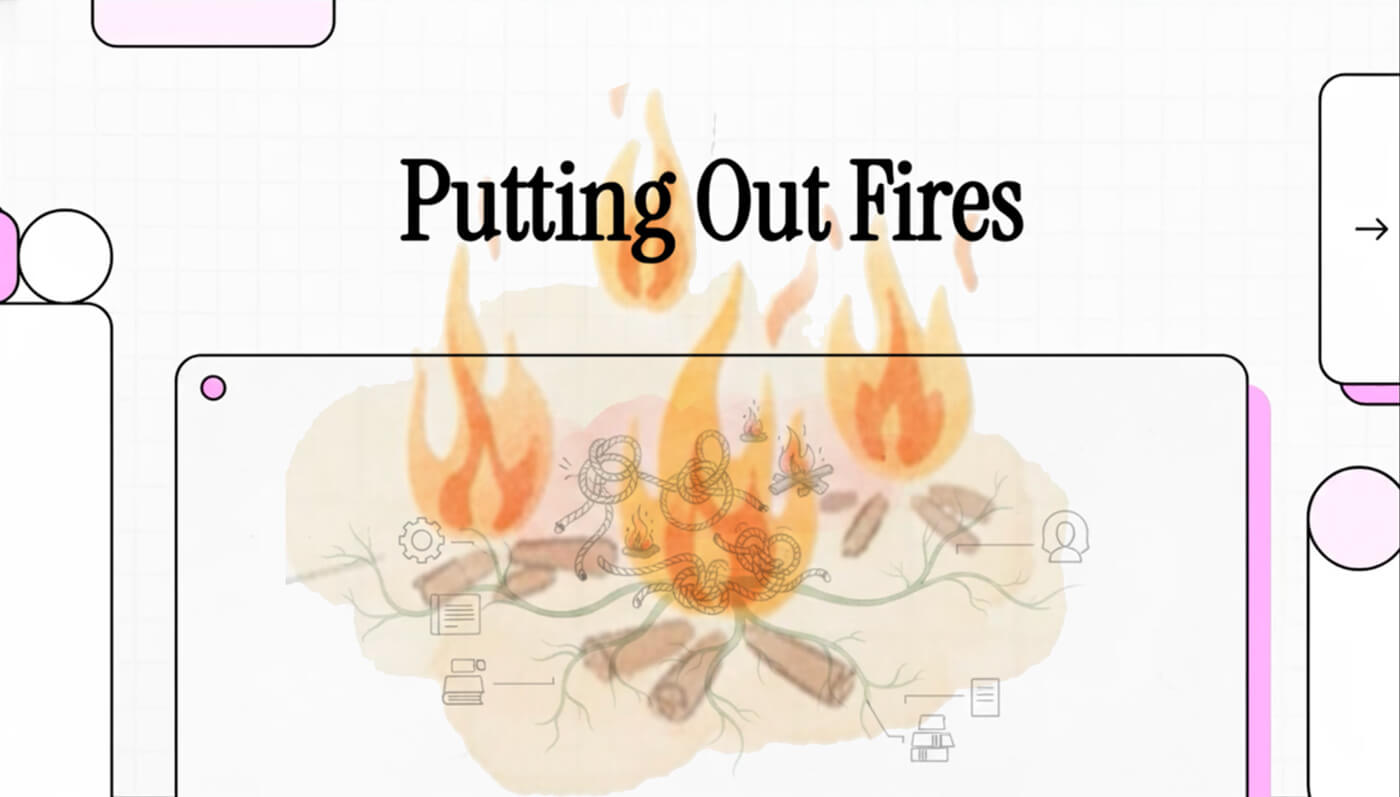
Putting Out Fires
Stop reacting to every fire. This resource provides the structure you need to categorize your daily challenges and pinpoint the systemic issues that require your attention.
Stop guessing. Start Evaluating.
Join the homes choosing prevention over reaction.
Our Program Evaluation service helps homes identify gaps early, strengthen IPAC practices, and build a more proactive culture of safety.