
The most successful homes do this: 3 major takeaways I learned from visiting 60 LTC homes last year

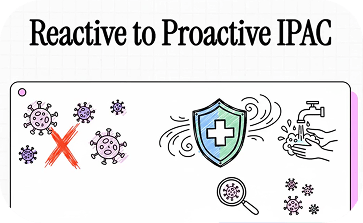
The most successful homes are not the ones spending all of their time putting out fires. They are the ones doing the work early enough to prevent them.
Last year, I walked into more than 60 long-term care homes.
Some were steady. Some were struggling. Some were in outbreak. Some were doing their best to hold things together while managing staffing pressures, documentation gaps, competing priorities, and the daily reality of caring for a vulnerable resident population.
And after visiting that many homes, one truth became impossible to ignore.
The most successful homes are not the ones spending all of their time putting out fires. They are the ones doing the work early enough to prevent them.
The shift from reactive to proactive
Because here is the reality in long-term care: too many teams are starting the day in reaction mode. It is the early morning call that a resident has been symptomatic for days. It is the moment you notice a break in protocol. It is the growing sense that everyone is working hard, but the home is still playing catch-up. Over time, that kind of constant vigilance without structure leads to surveillance fatigue. And in long-term care, surveillance fatigue is not just exhausting. It is risky.
That is why program evaluation matters.
Not as a formality. Not as a paper exercise. Not as one more audit to survive.
As a proactive playbook.
The strongest homes I visited were not waiting for an outbreak to show them what was broken. They were stepping back earlier and asking a better question: is our program actually preventing fires, or are we just getting better at putting them out?
What stood out first was staff practice.
Takeaway 1: Staff practice sets the tone
In the most successful homes, you could see the difference on the floor. Staff were not just wearing PPE because they had been told to. They were conducting point-of-care risk assessments with more confidence and consistency. There was stronger practice around Additional Precautions rooms. Shared equipment was cleaned and disinfected with intention. Environmental cleaning of resident rooms and common spaces was clearer, more routine, and better supported. Environmental Services (EVS) was not operating in a silo, and frontline staff were not left guessing what “clean enough” meant.
Then you looked at the setup of the home itself.
Takeaway 2: The setup of the home either helps or hurts
Because even the best staff cannot consistently succeed in an environment that makes good practice harder than it needs to be
The homes doing this well had made IPAC operational. PPE was available at critical points of use. ABHR was accessible throughout the home to support both staff and resident hand hygiene. Cleaning and disinfection tools were where they needed to be, from shared equipment stations to personal care areas. In these homes, staff were not being asked to work around the setup. The setup was helping them succeed
And then, almost every time, the biggest difference showed up in the documentation.
Takeaway 3: Documentation tells the real story
Their documentation was not just sitting in a binder. It reflected a living program.
Because paperwork tells a story
It tells you whether a home has an active program or a passive one. The strongest homes had SMART goals tied to real deficiencies. They had action plans around hand hygiene, infection reduction strategies, and other home-specific priorities. They had documented meeting minutes from outbreak management meetings and quarterly IPAC Committee meetings. They made important documents visible and accessible to staff, residents, and families where appropriate. Their documentation was not just sitting in a binder. It reflected a living program
And that is really the point.
What this actually means for your program
Program evaluation is not about chasing perfection. It is about creating control in a setting where the stakes are high and the margin for error is small. When a home evaluates staff practices, home setup, and documentation together, it stops treating IPAC like a checklist and starts treating it like a real program.
Because when this work is done well, the result is bigger than compliance. Residents are safer. Staff feel more supported. Morale improves. Families feel the difference, even if they cannot always name it.
The bottom line
The homes doing this best are not simply reacting faster. They are evaluating better.
After 60 homes, that is the clearest takeaway I can offer:
The homes doing this best are not simply reacting faster.
They are evaluating better.
And in long-term care, that shift is urgent.
Because the real question is this: is your IPAC program preventing fires, or is it just getting better at putting them out?
The Strongest Homes Do Not Guess. They use a framework.
Get our Free IPAC Program Evaluation Resource to assess staff practices, home setup and documentation in your facility.
Stop guessing. Start Evaluating.
Join the homes choosing prevention over reaction Our Program Evaluation service helps LTC homes identify gaps early, strengthen IPAC performance, and build a more proactive culture of safety.